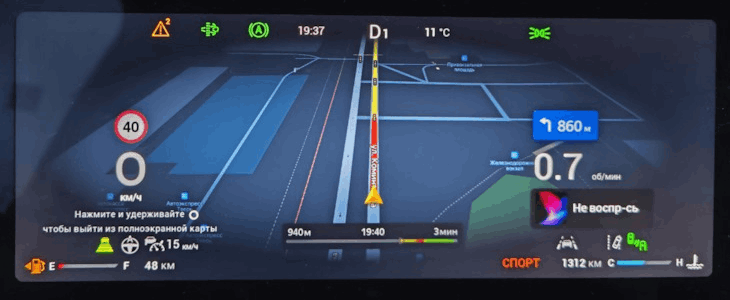
С помощью приложения JCarTools Вы можете сделать свой автомобиль гораздо лучше.
JCarTools позволяет запускать карты и другие приложения на приборной панели, выводить данные о маршруте и сообщения об камерах на проекцию.
В JCarTools можно автоматически запускать вентиляцию или подогрев сидений ориентируясь на температуру за бортом, включать обогрев руля и открывать солнечную шторку панорамной крыши при старте машины.
JCarTools работает с автомобилями концерна CHERY (JAECOO, EXEED, OMODA, JETOUR, TENET, SOUEAST)
Culture is made of small details. Watch any slice-of-life Malayalam film— Bangalore Days , June , Hridayam —and you will see the sadhya (the elaborate vegetarian feast) served on a banana leaf. You will hear the specific dialects: the nasal twang of Thrissur, the hard consonants of Kasaragod, or the Christian slang of Kottayam.
Kerala is a land of contradictions: the most literate state with high rates of domestic violence; a matrilineal past with present-day patriarchy; a communist stronghold where temples still perform ancient rituals. Malayalam cinema is at its best when it dissects these fault lines.
Take the backwaters. In Adoor Gopalakrishnan’s classic Elippathayam (The Rat Trap, 1981), the stagnant, mosquito-infested pond and the crumbling feudal manor represent the psychological decay of a landlord unable to adapt to a post-land-reform world. The water doesn’t move; neither does the protagonist. Similarly, in Lijo Jose Pellissery’s Jallikattu (2019), the dense, claustrophobic hills of a Kottayam village become a descent into primal chaos. The landscape—slippery, muddy, and aggressive—mirrors the collective madness of a community hunting a wild bull.
No discussion of Kerala culture is complete without its two great loves: rain and food. Malayalam cinema has perfected the art of the monsoon sequence. Rain in Kerala is not a hindrance; it is a catalyst for romance ( Manichitrathazhu ), violence ( Rorschach ), or catharsis ( Mayaanadhi ). The sound design in films like Ee.Ma.Yau uses the pounding of rain on corrugated tin roofs as a funeral dirge.
For the uninitiated, the phrase "Indian cinema" often conjures images of Bollywood’s technicolour spectacle or the hyper-masculine, logic-defying stunts of Tollywood. But on the southwestern coast of India, nestled between the Western Ghats and the Arabian Sea, lies a cinematic universe that operates on a fundamentally different wavelength: Malayalam cinema.
Culture is made of small details. Watch any slice-of-life Malayalam film— Bangalore Days , June , Hridayam —and you will see the sadhya (the elaborate vegetarian feast) served on a banana leaf. You will hear the specific dialects: the nasal twang of Thrissur, the hard consonants of Kasaragod, or the Christian slang of Kottayam.
Kerala is a land of contradictions: the most literate state with high rates of domestic violence; a matrilineal past with present-day patriarchy; a communist stronghold where temples still perform ancient rituals. Malayalam cinema is at its best when it dissects these fault lines. www desi mallu com best
Take the backwaters. In Adoor Gopalakrishnan’s classic Elippathayam (The Rat Trap, 1981), the stagnant, mosquito-infested pond and the crumbling feudal manor represent the psychological decay of a landlord unable to adapt to a post-land-reform world. The water doesn’t move; neither does the protagonist. Similarly, in Lijo Jose Pellissery’s Jallikattu (2019), the dense, claustrophobic hills of a Kottayam village become a descent into primal chaos. The landscape—slippery, muddy, and aggressive—mirrors the collective madness of a community hunting a wild bull. Culture is made of small details
No discussion of Kerala culture is complete without its two great loves: rain and food. Malayalam cinema has perfected the art of the monsoon sequence. Rain in Kerala is not a hindrance; it is a catalyst for romance ( Manichitrathazhu ), violence ( Rorschach ), or catharsis ( Mayaanadhi ). The sound design in films like Ee.Ma.Yau uses the pounding of rain on corrugated tin roofs as a funeral dirge. Kerala is a land of contradictions: the most
For the uninitiated, the phrase "Indian cinema" often conjures images of Bollywood’s technicolour spectacle or the hyper-masculine, logic-defying stunts of Tollywood. But on the southwestern coast of India, nestled between the Western Ghats and the Arabian Sea, lies a cinematic universe that operates on a fundamentally different wavelength: Malayalam cinema.